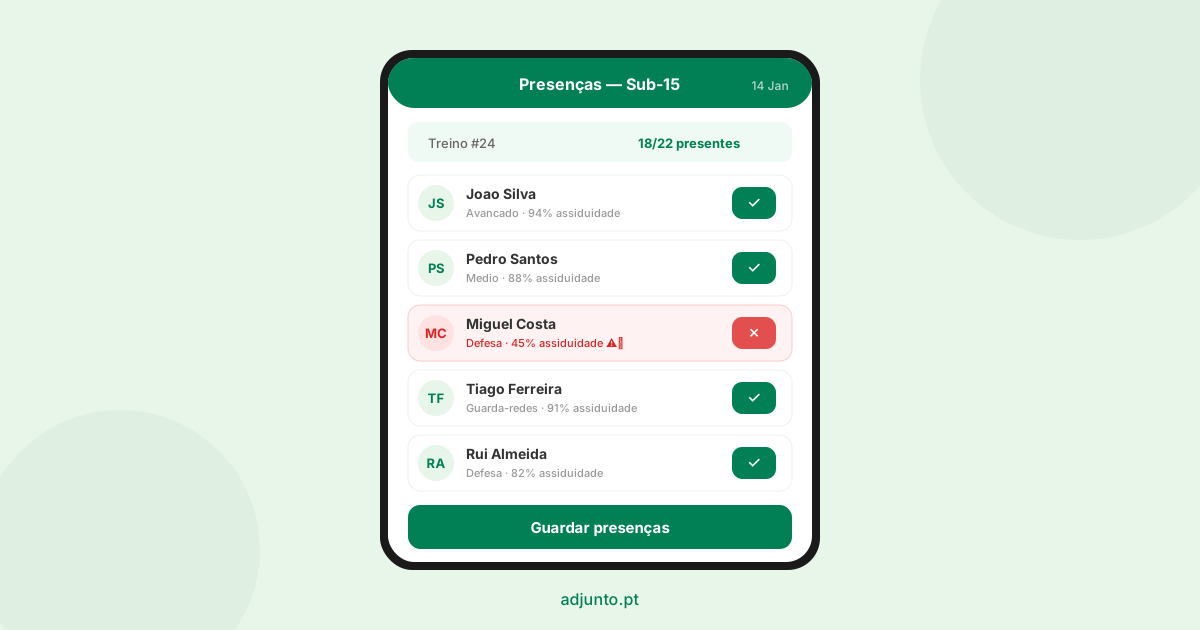
It seems like a minor detail: who came to training and who didn't. But when you look at the data over weeks and months, you start to see patterns that change how you manage the team.
📋 More than ticking "present"
Attendance tracking isn't a formality. It's a management tool. When you have attendance data, you can:
⚽ Fair squad selections
Those who train regularly deserve to be selected. Without data, decisions are based on impressions, and impressions create conflicts.
🔍 Spot problems early
A player who starts missing sessions might be unmotivated, dealing with personal issues, or injured. The sooner you notice, the sooner you act.
👨👩👦 Objective feedback for parents
In youth football, parents want to know how things are going. "Your child attended 85% of sessions" is clearer than "they come most of the time".
📈 Track development
A player who trains 3 times a week develops faster than one who shows up once. The data confirms what the eye sees.
30s
to record attendance
85%
ideal attendance rate
∞
data stored forever
📓 The notebook problem
Many coaches still record attendance in a notebook. It works, until the notebook goes missing. Or until you need to know how many times John trained in the last two months and have to flip through 60 pages.
💡 Tip
With a digital tool, recording attendance takes 30 seconds. Literally. Open the list, mark who's there, done. The data stays saved, searchable and accessible forever.
🤝 Attendance and squad selection: a direct link
One of the biggest challenges for coaches is justifying squad selections.
"Why wasn't my child selected?" — Every youth coach has heard this question.
When you have attendance data, the answer is simple and objective:
"Your child attended 40% of sessions this month. The squad prioritizes those who train regularly."
There's no argument, there's data.
🌱 In youth football, attendance is development
In youth football, the main goal isn't winning matches, it's developing players. And development happens in training, not in matches.
A player who doesn't train, doesn't improve. Full stop.
Recording attendance is, at its core, recording development opportunities. When you look at the end of the season and see that a player attended 90% of sessions, you know they had 90% of the opportunities to get better.
"With Adjunto I can plan training, save drills and track player attendance, all in one place. I stopped using Excel."
🚀 How to start
If you're not tracking attendance yet, start today. It doesn't need to be perfect, it needs to be consistent.
- ✅ Mark who came to each session
- 📊 After a month, you already have enough data
- 🎯 Use the data to make better decisions
💡 Tip
If you want to go further, use a tool that lets you see attendance charts, compare players and cross-reference attendance with squad selections. The information is there, you just need to organize it.